We compared manufacturer specs, manuals and warranty terms. We have not hands-on tested these products yet. How we research
We may earn a commission when you buy through links on this page. As an Amazon Associate I earn from qualifying purchases. How we make money
A saltwater chlorine generator makes chlorine from salt dissolved in the pool, so you add less chlorine by hand. It does not make the pool chlorine-free, and you still test the water. The decisions are the pool size rating, adjustable output and whether it is plug-in or hardwired. This page is for above-ground and inground owners considering salt.
We compared 4 saltwater chlorine generators and picked 4.
Our picks at a glance
1
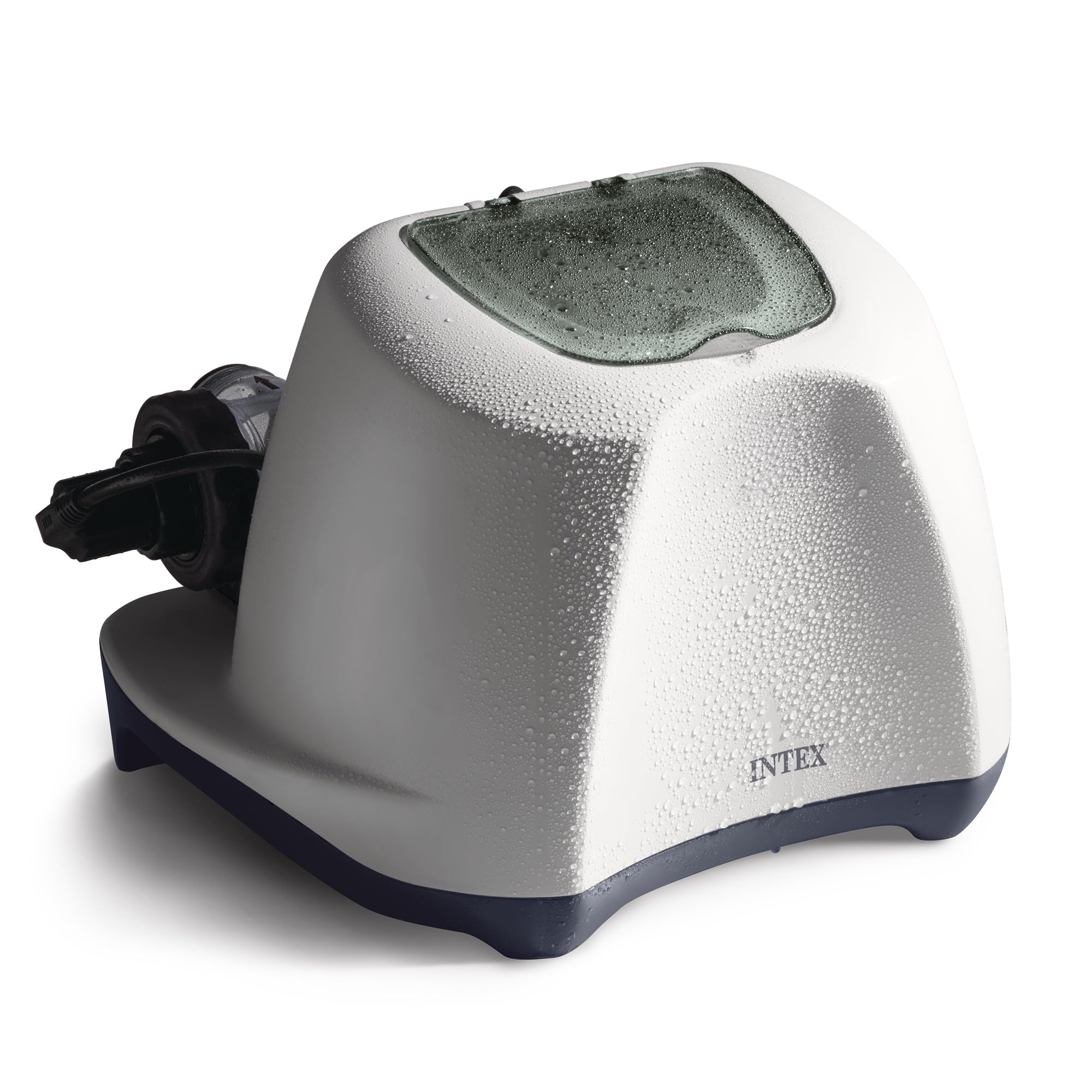
★ Start hereBest for above-ground poolsIntex Krystal Clear QS1200Turns dissolved salt into chlorine for Intex and other above-ground pools at a low price.
$204.99Price as of Nov 28, 2026, 3:28 AM ET. Details
Specs as listed: every value in our table comes from the manufacturer or seller listing. Maximum pool size, chlorine output, cell life and salt range are as the maker lists them. A dash means the listing does not give that spec.
We have not hands-on tested these products. Full method
How to choose the right saltwater chlorine generator
Salt changes how you add chlorine, not what you test for. Read saltwater vs chlorine pool to compare the care, and pool chemistry for beginners for the numbers. Work through the table in order. Check the maximum pool size against your gallons, then the chlorine output, the cell life and the power type. Then check the extras: a self-cleaning cell and a salt readout. Whatever you choose, keep testing free chlorine and pH, because the generator changes how chlorine is made and not what the water needs.
Pool size rating
Compare the maximum pool size in the table with your pool's gallons, and check the manual for the maker's guidance on pool size. Our pump size guide shows how to work out gallons.
Adjustable output
Look for a control that adjusts output, and compare the Chlorine output column. The water still needs testing to the CDC targets, so keep a test kit handy.
Cell life and replacement cost
Check the rated cell life in hours and the cost of a replacement cell. Compare warranty terms for the cell itself, since it is the part most likely to be replaced.
Plug-in or hardwired
Check the power type before you buy and follow the manual. If the unit must be hardwired, have a qualified electrician do the work.
Self-cleaning cell
Check the Self-cleaning column and read the manual for what routine cell care the maker asks for. See saltwater vs chlorine pool for the weekly work on each side.
Salt level readout
Check whether the unit shows the salt level, and read the manual for the salt range it needs. The Salt range column in the table gives the maker's figure for each pick.
Tips for using your saltwater chlorine generator
Test free chlorine and pH just as you would with any chlorine pool, to the same CDC targets (CDC).
Use the salt level your generator's manual gives.
Use a system made for spas if you want one for a hot tub.
Check the manuals for your pool and other equipment before you switch to salt, and follow any salt limit a maker gives for its parts.
Keep a written log of salt level, free chlorine and pH. A generator changes how chlorine arrives, not how often you check it.
FAQ
Is a saltwater pool chlorine-free?
No. The system makes chlorine from salt, so you still test free chlorine and pH against the same CDC targets (CDC).
What salt level?
Use the range in your generator's manual.
Do I need stabilizer?
If you use cyanuric acid, the CDC says to keep chlorine at 2 ppm or more, and not to use cyanuric acid in hot tubs (CDC).
Will it work in a hot tub?
Only with a system that is made for spas.
What does the CDC say about chlorine in a saltwater pool?
The same targets apply as for any pool: free chlorine of at least 1 ppm, or 2 ppm with cyanuric acid, and a pH of 7.0 to 7.8 (CDC).
Can I install it myself?
Check the Power column. If a unit must be hardwired, have a qualified electrician do the work, and follow the manual for any plug-in model.
How do I work out my pool's gallons?
For a rectangular pool, multiply length by width by average depth to get cubic feet, then multiply by 7.48 to get gallons (PoolSpaNews). Compare the answer with the maximum pool size in the table.
Is plug-in or hardwired better?
The usual split is plug-in for above-ground pools and hardwired for inground pools. Check the Power column, and have a qualified electrician do any hardwired installation.